Sleep apnea
What is sleep apnea?
Sleep apnea is a common condition in which breathing stops and restarts many times during sleep. Loud snoring, gasping and daytime sleepiness are common signs, and a sleep study can confirm it. Treatments such as CPAP work well for many people.
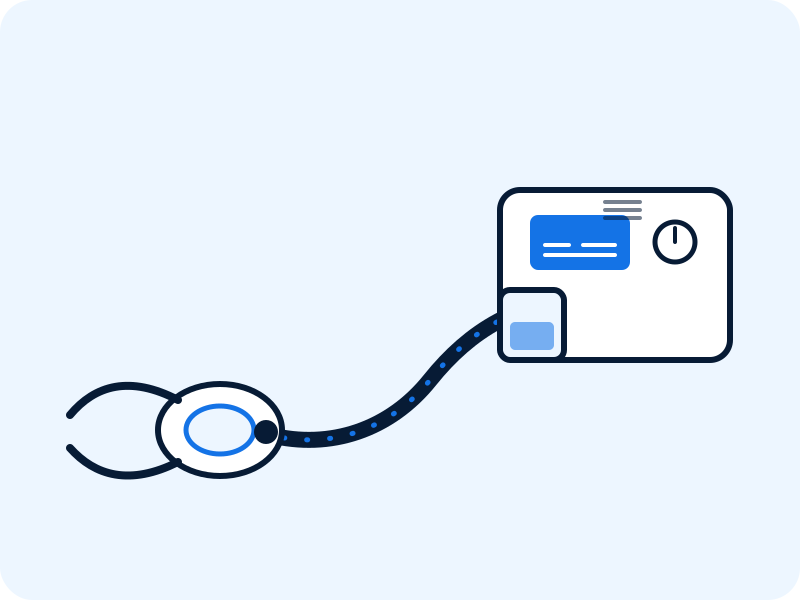
Key facts
- Most common type
- Obstructive sleep apnea (NHLBI)
- How it is diagnosed
- A sleep study, in a lab or at home
- Most common treatment
- A positive airway pressure (PAP) machine (NHLBI)
Sleep apnea is a common condition that occurs when your breathing stops and restarts many times while you sleep [1]. This can prevent your body from getting enough oxygen [1]. The American Academy of Sleep Medicine (AASM) says pauses can happen a few times a night or, in more severe cases, several hundred times a night [3].
Why it mattersLink to section: Why it matters
If sleep apnea is not diagnosed or treated, you may not get enough quality sleep, which can lead to problems with concentrating, making decisions, remembering things or controlling your behavior [1]. The National Heart, Lung, and Blood Institute says untreated sleep apnea increases the risk of stroke, heart attack and other serious problems [1]. The AASM links it to high blood pressure, heart disease, stroke, prediabetes and diabetes, and depression [3].
Snoring and sleep apneaLink to section: Snoring and sleep apnea
Snoring is the most common symptom, but not everyone who snores has sleep apnea [3]. See is snoring a sign of sleep apnea?
Getting helpLink to section: Getting help
Many people with sleep apnea have not been diagnosed [3]. If you recognize the signs, a clinician or a sleep specialist can help you decide whether a sleep study makes sense. Treatment options such as CPAP therapy can help you sleep through the night without breathing pauses [5].
When to see a doctor
The NHLBI suggests talking to your provider if someone tells you that you snore or gasp for air during sleep, or if you have excessive daytime sleepiness [1]. See also is snoring a sign of sleep apnea?
If sleepiness makes it hard to stay awake while driving, talk to your provider soon. The AASM says many people with sleep apnea have a hard time staying awake and concentrating while driving, and untreated sleep apnea makes you more likely to be in a deadly crash [5].
Frequently asked questions
Does everyone who snores have sleep apnea?
No. The American Academy of Sleep Medicine says snoring is the most common symptom of sleep apnea, but not everyone who snores has it. Snoring is more likely to be a sign of sleep apnea when it comes with silent pauses in breathing and choking or gasping sounds.
Can I be tested at home?
Sometimes. The American Academy of Sleep Medicine says people with many risk factors and no other medical disorders may be candidates for a home sleep apnea test. More complex cases need an overnight study in a sleep lab.
Can a smartwatch or app diagnose sleep apnea?
The American Academy of Sleep Medicine cautions that apps and sleep-tracking devices that claim to detect sleep apnea can give unreliable results. Discuss any results with your clinician.
Will losing weight make sleep apnea go away?
It may help. The American Academy of Sleep Medicine says weight loss can improve or even eliminate symptoms in some people with overweight or obesity, but there is no certainty that it will.
Sources
- 1. Sleep Apnea: What Is Sleep Apnea? (opens external site) — National Heart, Lung, and Blood Institute, What Is Sleep Apnea? · Accessed Sep 24, 2026
- 2. Sleep Apnea: Symptoms (opens external site) — National Heart, Lung, and Blood Institute, Symptoms · Accessed Sep 24, 2026
- 3. Obstructive Sleep Apnea (opens external site) — American Academy of Sleep Medicine (Sleep Education), Symptoms; Risk factors; Diagnosis; Treatment · Accessed Sep 24, 2026
- 4. Sleep Apnea: Treatment (opens external site) — National Heart, Lung, and Blood Institute, Healthy lifestyle changes; Positive airway pressure; Oral devices; Surgical procedures · Accessed Sep 24, 2026
- 5. Continuous Positive Airway Pressure (CPAP) (opens external site) — American Academy of Sleep Medicine (Sleep Education), Motor vehicle accident prevention · Accessed Sep 24, 2026